
Repair guide
Frequent starts and stops are worth documenting, but there is no universal cycle duration that diagnoses a problem. Controls, airflow, equipment condition, refrigerant-circuit conditions, system sizing, weather, and the current cooling demand can affect what you observe.
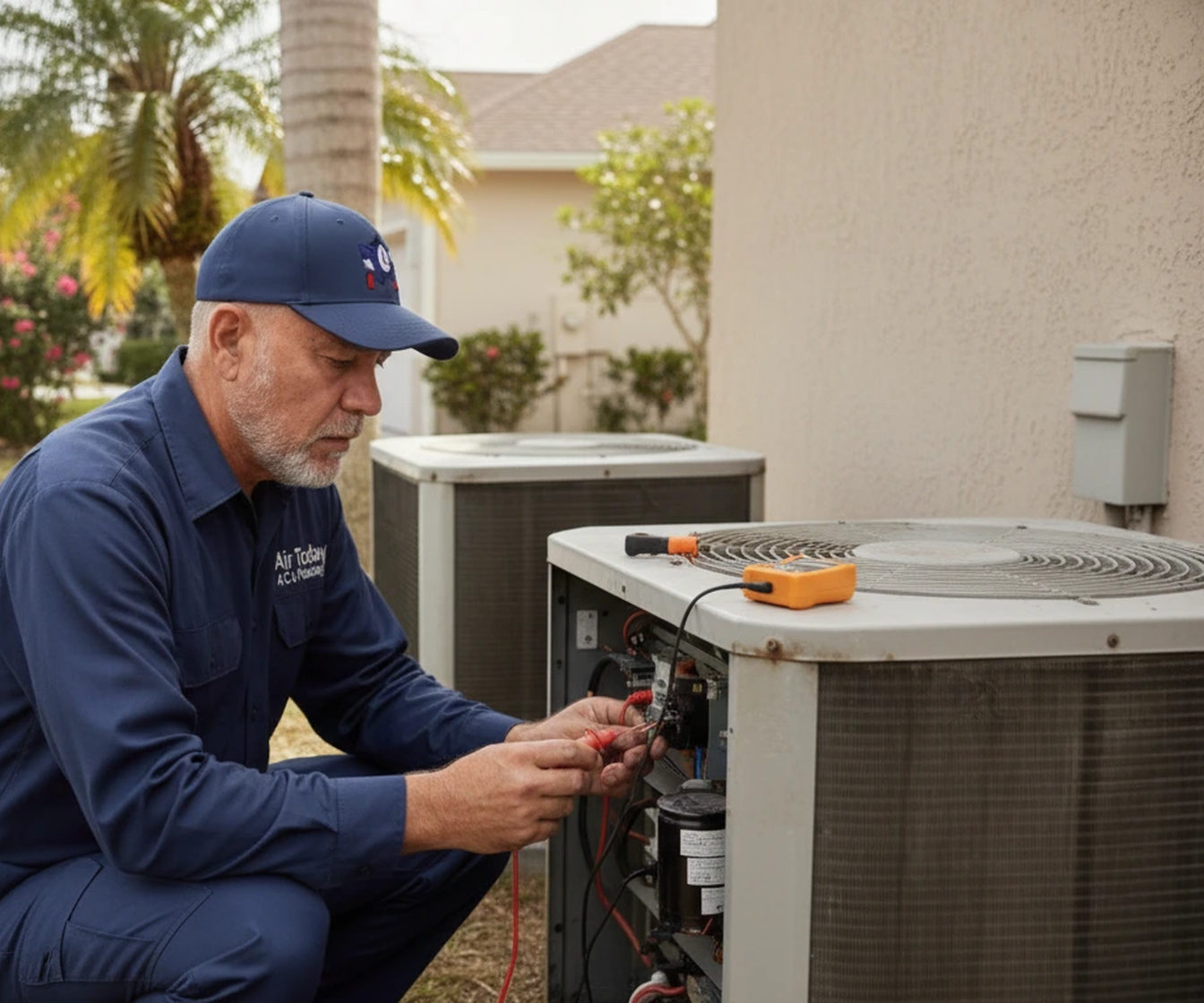
What frequent cycling can look like
Frequent cycling means the system appears to start and stop more often than you expect while cooling is requested. Record the pattern as an observation; it does not identify a particular fault remotely.
Safe observations before you call
Observe normal controls and the area around the equipment without setting a universal timer or taking equipment apart.
- Note the displayed temperature, requested setting, and the start-and-stop pattern you notice.
- Note affected rooms, airflow at normally used registers, visible water, and whether comfort changes.
- Note any unusual electrical or burning conditions from a safe distance without touching equipment.
Safety boundary: Do not remove panels, touch wiring, handle refrigerant, inspect internal moving parts, clean coils, clear an internal drain, use chemicals, or access ducts beyond normal registers and return grilles. Stop using or touching the equipment when there is smoke, a burning odor, sparking, water near electrical components, or an unsafe breaker condition; those conditions require professional evaluation rather than repeated breaker resets.
Possible categories behind repeated starts and stops
Controls, airflow, equipment condition, refrigerant-circuit conditions, system sizing, weather, and cooling demand are broad categories that can affect repeated starts and stops. An in-person evaluation is needed to distinguish them.
Why there is no universal cycle-time rule
Cycle behavior changes with the home, controls, outdoor conditions, cooling demand, and system condition. A duration by itself is not a reliable diagnosis.
When to stop and request professional evaluation
Request professional evaluation when the repeated starts and stops continue, cooling is not improving, or the condition makes the area unsafe. Do not repeatedly reset a breaker to keep the system running.
What to share with Air Today
Share the observations, ZIP, and contact details through the request or phone actions so Air Today can confirm the next step without promising a diagnosis or price remotely.
- The property ZIP, affected rooms, displayed temperature, and requested setting.
- The start-and-stop pattern, airflow observations, visible water, and comfort changes.
- Whether you noticed smoke, a burning odor, sparking, water near electrical components, or an unsafe breaker condition.
- The best phone number or contact method for confirming the visit.
Sources
- Measure Guideline: Air Conditioner Diagnostics, Maintenance, and Replacement — U.S. Department of Energy
- Homeowners and Consumers: Frequently Asked Questions — U.S. Environmental Protection Agency
- Troubleshooting an AC Not Working — Carrier
- What Is AC Short Cycling: Causes, Effects, and Troubleshooting — Carrier
Describe the start-and-stop pattern, property ZIP, and the best way to reach you so Air Today can arrange an in-person evaluation.
What customers say about Air Today
Verified Google reviews
 Posted on Google
 Zach Merzel
Trustindex verifies that the original source of the review is Google.
Maurice was absolutely incredible. Our wall unit needed repair, and he arrived promptly, professionally fixed the issue, and was a joy to work with. Thank you again!Posted on Google Christiane PesaventoFast friendly service. Maurice was great, came quickly and charged a good price. I will be calling him for all my AC and plumbing needs moving forward.Posted on Google
 Patricia MartinVery professional gentleman -Maurice … He was pleasant and easy to communicate with …He knows his stuff and had some good suggestions Sincerely , Ray & PatPosted on Google
 Pat MartinVery professional gentleman -Maurice … He was pleasant and easy to communicate with …He knows his stuff and had some good suggestions Sincerely , Ray & PatPosted on Google
 K GHighly recommend. Air quit at 3, Maurice was here at 5—ON A SUNDAY! Life saver . Had the parts we needed.Posted on Google
 Brianna Garciagreat service, in no time! recommend 10/10!Posted on Google
 Mark ParisiCalled right away, gave me a quote before he even showed up — something no one else was willing to do. He came out fast, was super friendly, and fixed the problem quickly. Saved my Saturday night! Fantastic work and way better service than anyone else I called. Highly recommend.Posted on Google
 marikary gomezGracias a Maurici por ser tan profesional en la instalación de mi nuevo coil, muy recordadoPosted on Google
 irving portalatinExcellent service right on time when you need your ac fixes.Posted on Google
 B ThomasGreat service and highly responsiveVerified by TrustindexTrustindex verified badge is the Universal Symbol of Trust. Only the greatest companies can get the verified badge who has a review score above 4.5, based on customer reviews over the past 12 months. Read more
From the field · South Florida
Real A/C work across South Florida
Explore documented Air Today jobs. Select a pin to read the actual project and practical advice for your own A/C.
on this map