
Real Air Today repair · Evaporator coil
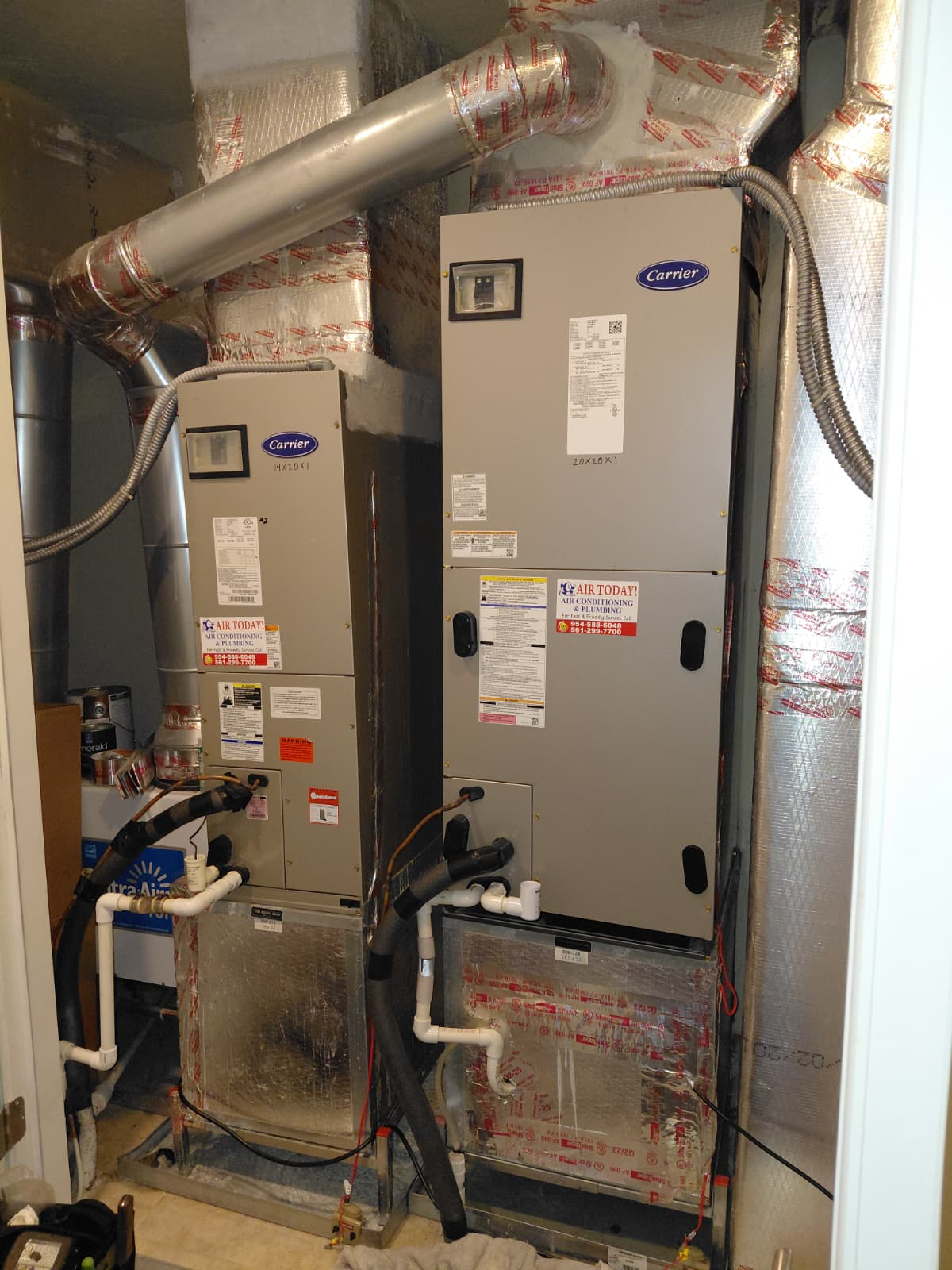
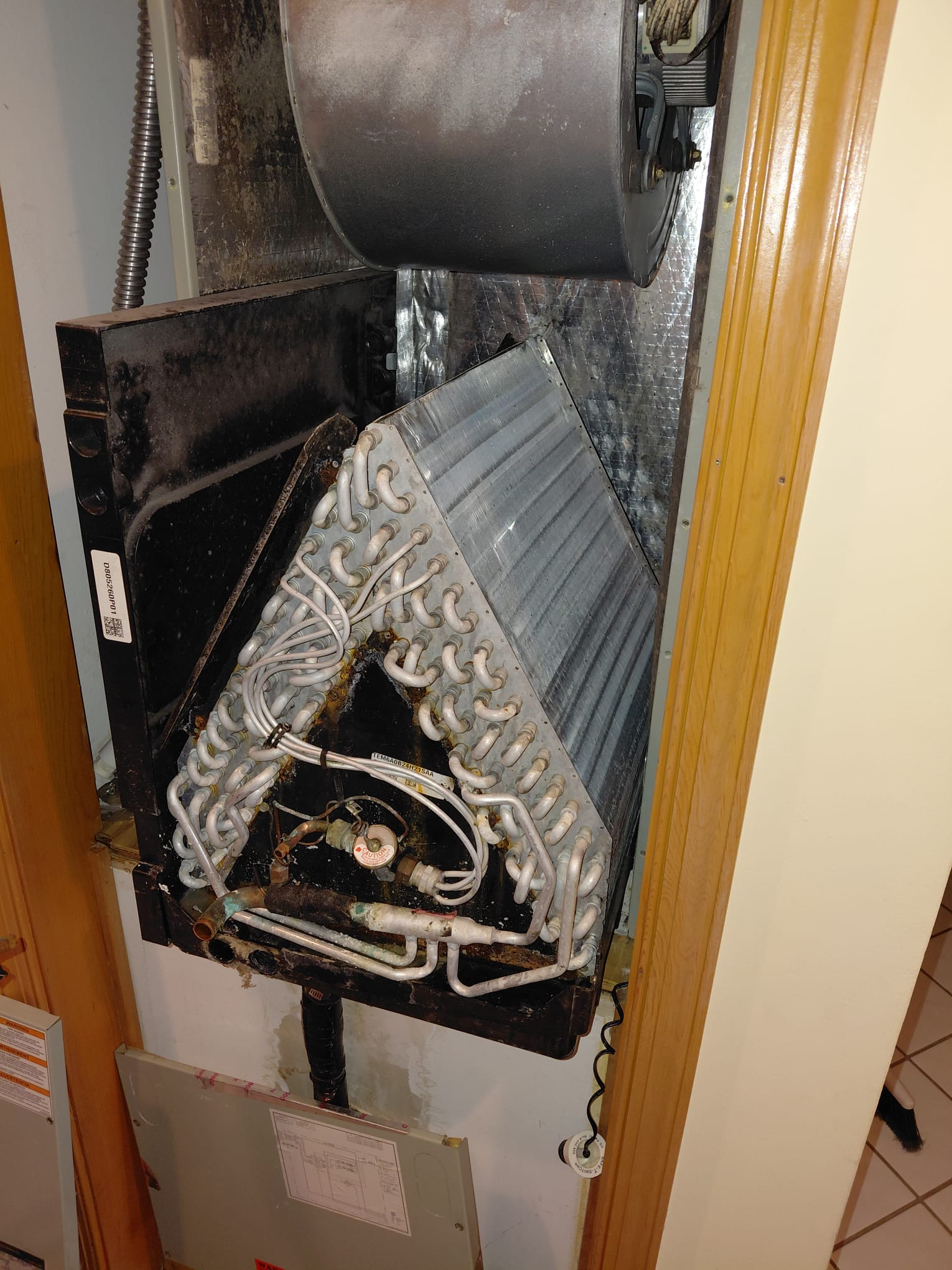
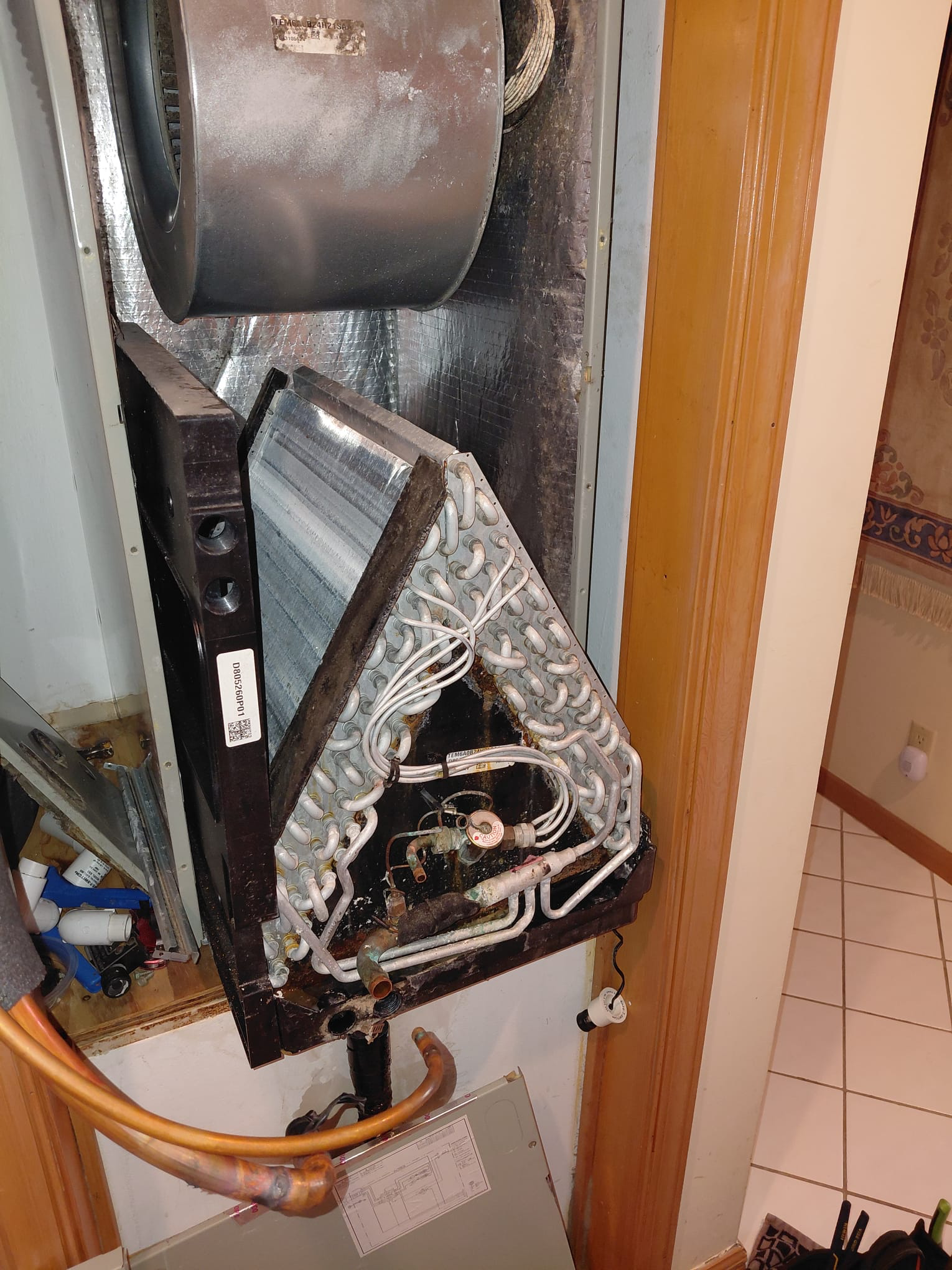
Mauricio reported a refrigerant leak at an evaporator coil and said the repair involved replacing it with a new Trane evaporator coil. The project photos show the air handler and removed coil. They do not show the new coil installed.
Cooling symptoms need a diagnosis
The evaporator coil is part of the indoor cooling system. A refrigerant leak can affect cooling, but warm air or long run times do not by themselves prove a coil leak. Airflow, controls, and other equipment conditions can produce similar symptoms. A technician should evaluate the system before recommending a repair.
What the project photos show
The images document access to the indoor equipment and removal of the old component. According to Mauricio, the team identified a leak at that coil and replaced it. The photographs do not establish the leak-test method, refrigerant quantity, system compatibility, or final performance.
If your A/C is not cooling
Note what the thermostat shows, whether airflow from the vents has changed, and when the problem began. Avoid opening equipment panels or handling refrigerant. Share your observations with the technician, then ask for the findings and options after the system is evaluated.
Could these symptoms point to a coil leak?
A house that cools less effectively than before, long run times, or an A/C that cannot keep up during the day can prompt a service visit. Those are reasons to investigate, not proof of a refrigerant leak. A dirty filter, restricted airflow, a control problem, or another fault may cause similar discomfort. Ice on equipment or refrigerant lines also needs professional evaluation; it does not identify the leaking component on its own.
If you see ice, turn cooling off and tell the service team what you observed. Keep people away from exposed electrical parts, and do not remove panels or try to add refrigerant yourself. Record when the problem started and whether airflow from the vents changed. These details help the technician decide what to test.
Why finding the leak matters
Refrigerant circulates within a closed cooling system. If the charge is low because of a leak, adding refrigerant alone does not address the place where it escapes. A technician should determine where the problem is and explain whether a component repair or replacement is appropriate. The answer depends on the system’s condition, compatible parts, and the findings from the visit.
This job is one example of a coil replacement after a reported leak. The removed coil is visible in the photos; the images are not a guide to diagnosing another home’s equipment. The fact that this repair used a Trane coil does not mean a Trane part fits every system.
Questions to ask and common concerns
Ask which component is leaking, how the finding was confirmed, whether the proposed part is compatible with the equipment, and what the work includes. Request a written explanation of the repair, warranty terms, and any follow-up maintenance. Keeping filters clean and airflow unobstructed supports normal operation, but maintenance cannot guarantee that a coil will never develop a leak.
Can a homeowner confirm a refrigerant leak by looking at the coil?
Usually not. A cooling symptom or a photo of a coil is insufficient to locate a leak. A qualified technician needs to assess the system and explain the finding.
If the A/C is not cooling, should I ask for refrigerant first?
Ask for diagnosis first. Low charge, if present, may reflect a leak, and other faults can also cause poor cooling. The right repair follows the actual finding.
Does a coil replacement mean the entire A/C was replaced?
No. This reported job involved replacement of the evaporator coil. The supplied photographs do not document a whole-system replacement or the completed new coil installation.
Need help with an A/C that is not cooling? Tell Air Today what you are noticing, and we will discuss the next step.
What customers say about Air Today
Verified Google reviews
 Posted on Google

 Zach Merzel
Trustindex verifies that the original source of the review is Google.
Maurice was absolutely incredible. Our wall unit needed repair, and he arrived promptly, professionally fixed the issue, and was a joy to work with. Thank you again!Posted on Google Christiane PesaventoFast friendly service. Maurice was great, came quickly and charged a good price. I will be calling him for all my AC and plumbing needs moving forward.Posted on Google
 Patricia MartinVery professional gentleman -Maurice … He was pleasant and easy to communicate with …He knows his stuff and had some good suggestions Sincerely , Ray & PatPosted on Google
 Pat MartinVery professional gentleman -Maurice … He was pleasant and easy to communicate with …He knows his stuff and had some good suggestions Sincerely , Ray & PatPosted on Google
 K GHighly recommend. Air quit at 3, Maurice was here at 5—ON A SUNDAY! Life saver . Had the parts we needed.Posted on Google
 Brianna Garciagreat service, in no time! recommend 10/10!Posted on Google
 Mark ParisiCalled right away, gave me a quote before he even showed up — something no one else was willing to do. He came out fast, was super friendly, and fixed the problem quickly. Saved my Saturday night! Fantastic work and way better service than anyone else I called. Highly recommend.Posted on Google
 marikary gomezGracias a Maurici por ser tan profesional en la instalación de mi nuevo coil, muy recordadoPosted on Google
 irving portalatinExcellent service right on time when you need your ac fixes.Posted on Google
 B ThomasGreat service and highly responsiveVerified by TrustindexTrustindex verified badge is the Universal Symbol of Trust. Only the greatest companies can get the verified badge who has a review score above 4.5, based on customer reviews over the past 12 months. Read more
From the field · South Florida
Real A/C work across South Florida
Explore documented Air Today jobs. Select a pin to read the actual project and practical advice for your own A/C.
on this map